

Top 10 High ROI Freehold Areas in Dubai for Investors 2026
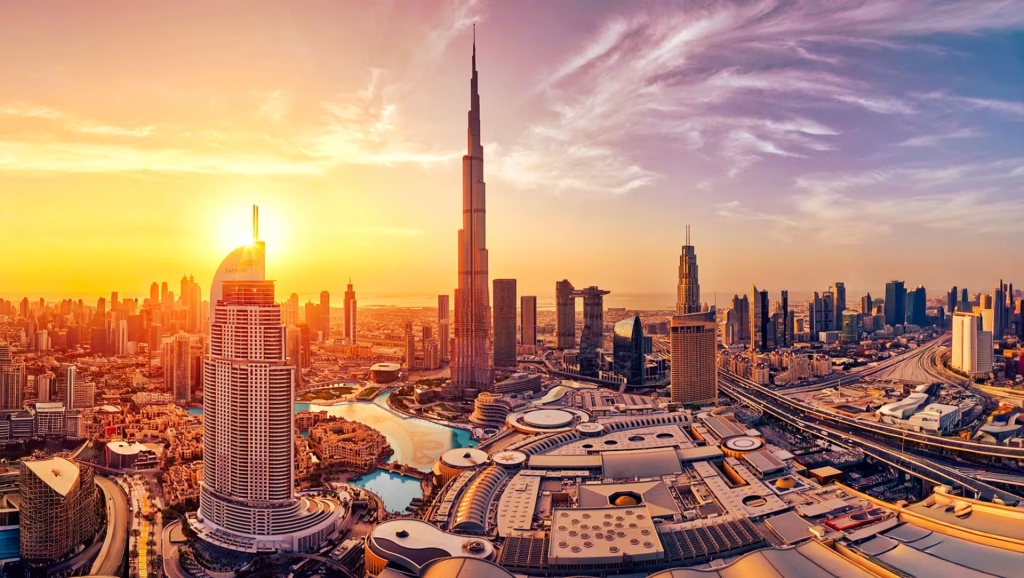
The demand for High ROI Freehold Areas in Dubai continues to rise as global investors search for stable, tax-free, and high-yield real estate markets. Dubai has positioned itself as a leading investment hub where foreign buyers can enjoy full property ownership in designated freehold zones. In 2026, these areas are not just about ownership but about long-term wealth creation and passive income generation.
Investors today are no longer only looking at gross rental yields; instead, they focus on net returns, infrastructure growth, and developer reliability. The concept of High ROI Freehold Areas in Dubai is now closely linked with lifestyle demand, tenant demographics, and future capital appreciation potential. This shift has made Dubai one of the most data-driven real estate markets in the world.
Dubai Freehold Market Overview and ROI Fundamentals
The rise of High ROI Freehold Areas in Dubai is directly connected to Dubai’s investor-friendly regulations and freehold ownership laws introduced to attract global capital. These regulations allow expatriates and foreign investors to fully own property, making Dubai one of the most accessible luxury markets worldwide. This has created a highly competitive and liquid property ecosystem.
One of the most important factors in evaluating High ROI Freehold Areas in Dubai is understanding gross vs net ROI. While gross ROI shows rental yield before expenses, net ROI reflects true profitability after deducting service charges, maintenance, and management fees. For example, communities like JVC may show 8–9% gross yield, but net ROI can drop to 6–7% after deductions.
Another key element is Dubai freehold investment areas 2026 where infrastructure development plays a major role. Areas connected to metro lines, highways, and business hubs consistently outperform others. Investors who focus on data-backed ROI analysis rather than hype-driven purchases achieve stronger long-term returns and lower investment risk.
Pool Investment Offer in Dubai: Earn Up to 80% ROI
Offering investors the opportunity to partner with a qualified developer through a pooled investment starting from $0.5M (AED 1.7M).
Top High ROI Freehold Communities in Dubai
The most attractive High ROI Freehold Areas in Dubai include communities like Jumeirah Village Circle (JVC), Business Bay, Dubai Marina, Dubai Hills Estate, and Dubai South. Each of these areas serves a different investor profile, from budget-friendly rental income seekers to luxury capital appreciation investors.
For example, Dubai Marina freehold high ROI area remains one of the strongest short-term rental markets due to tourism demand and waterfront lifestyle appeal. Meanwhile, Business Bay freehold investment properties attract working professionals due to proximity to Downtown Dubai, making it a strong long-term rental zone.
Emerging zones like Dubai South freehold property investment 2026 are gaining attention due to Expo legacy infrastructure and airport expansion. These communities offer early-stage pricing advantages, making them ideal for investors seeking capital appreciation over time rather than immediate rental returns.


Net ROI vs Gross ROI Breakdown in Dubai Freehold Areas
Understanding real profitability in High ROI Freehold Areas in Dubai requires a deep dive into net ROI structures. Many investors mistakenly rely on gross yields without considering hidden costs such as service charges and management fees. This often leads to inaccurate investment expectations.
For example, RERA service charges Dubai JVC AED 10–16 sqft can significantly impact net returns in mid-range communities. Additionally, Dubai property management fees ROI impact typically range between 8–10%, depending on service quality and occupancy management. These costs must be deducted to calculate real profit.
A proper Dubai freehold investment net yield guide shows that while some areas advertise 9% returns, actual net ROI may be closer to 5.5–7%. Investors who analyze Dubai gross vs net ROI property analysis are better positioned to select sustainable long-term assets rather than short-term hype investments.
Developer Track Record and Risk Analysis
When investing in High ROI Freehold Areas in Dubai, developer reputation plays a major role in risk management. Established developers like Emaar are known for timely handovers and strong community planning, while emerging developers may offer higher returns but carry delivery risks.
A strong Emaar vs emerging developers Dubai ROI comparison shows that premium developers provide stability, while newer developers may offer aggressive pricing in off-plan projects. However, delayed handovers can affect rental income timelines and overall ROI performance. Investors should also evaluate Dubai off-plan freehold handover reliability and past delivery history before committing. A structured Dubai freehold property risk analysis 2026 helps reduce exposure to construction delays and ensures better capital protection in long-term investments.
Tenant Mapping and Rental Demand Strategy
Successful investing in High ROI Freehold Areas in Dubai depends heavily on understanding tenant behavior. Each community attracts a different demographic, which directly impacts rental demand and occupancy rates. This is known as tenant persona mapping.
For example, Dubai Silicon Oasis tech professionals housing attracts IT workers and students due to its affordability and proximity to tech parks. In contrast, Dubai Hills family community investment zone appeals to families seeking premium lifestyle amenities and green spaces. Understanding tenant profiles helps investors choose the right property type whether apartments or villas and improves rental stability. This strategy ensures consistent income in Dubai high rental yield freehold communities and reduces vacancy risks over time.

Exit Strategy and Capital Growth Planning
A smart investor in High ROI Freehold Areas in Dubai does not only focus on buying but also on knowing when to exit for maximum profit. Timing the exit correctly can significantly increase capital gains, especially in fast-developing communities where infrastructure is still maturing and demand is rising steadily.
In many High ROI Freehold Areas in Dubai, the best exit window is often just after handover when community facilities are completed and demand from end-users increases. This stage usually creates a price surge due to limited supply and growing occupancy, allowing investors to maximize resale value. A structured Dubai freehold exit strategy investment guide 2026 also considers market cycles, interest rates, and upcoming supply. Investors who plan exits based on data rather than emotion often outperform long-term holders who miss peak valuation phases in competitive communities.
JVC, Business Bay, and Marina: Deep Project-Level ROI Analysis
Some of the strongest High ROI Freehold Areas in Dubai are not just defined by location but by specific buildings and clusters within them. For example, Jumeirah Village Circle (JVC) offers varying ROI depending on building quality, location within the circle, and developer reputation.
A JVC building level ROI investment guide shows that newer clusters near main exits and retail zones tend to perform better in both rental demand and resale value. Meanwhile, older buildings may offer higher yields but lower appreciation potential, making micro-location analysis critical. Similarly, Business Bay freehold investment properties vary widely based on tower quality and canal-facing units. In Dubai Marina freehold high ROI area, waterfront apartments consistently outperform inland units due to tourist demand and short-term rental appeal, making project-level selection essential for investors.
Infrastructure Growth and Metro Connectivity Impact on ROI
Infrastructure development is one of the strongest drivers behind High ROI Freehold Areas in Dubai. Communities connected to metro lines, highways, and business hubs consistently show higher occupancy rates and stronger capital appreciation over time.
Areas linked to Dubai metro connected freehold areas ROI benefit from easier commuting, which attracts working professionals and long-term tenants. This directly improves rental stability and reduces vacancy risk, especially in mid-income housing segments. Additionally, Dubai infrastructure driven freehold investment zones near upcoming projects like new metro extensions or commercial districts often see early price appreciation. Investors who enter before infrastructure completion usually achieve higher ROI compared to late-stage buyers.
Dubai Secondary Market and Liquidity Trends
The secondary market plays a major role in High ROI Freehold Areas in Dubai, especially for investors seeking quick resale opportunities. Liquid markets allow investors to exit faster without long holding periods, which is important for portfolio flexibility.
In recent years, Dubai secondary market freehold property trends have shown increased demand for ready-to-move-in units in established communities. Buyers prefer completed projects due to reduced construction risk and immediate rental income potential. High liquidity is also seen in Dubai real estate liquidity freehold areas such as Business Bay and Dubai Marina, where international demand remains strong year-round. High ROI Freehold Areas in Dubai makes these zones ideal for both short-term flipping and long-term holding strategies.
Rental Yield vs Capital Appreciation Strategy
Investors in High ROI Freehold Areas in Dubai often face a key decision: focus on rental income or capital growth. Both strategies are valid, but each depends on location, property type, and market cycle positioning.
For example, Dubai rental yield vs capital appreciation freehold analysis shows that areas like JVC and International City offer higher rental yields, while Dubai Hills Estate and Palm Jumeirah focus more on long-term appreciation. A balanced portfolio across Dubai long-term capital growth freehold zones and high-yield communities helps investors reduce risk while maximizing total returns. This hybrid strategy is widely used by experienced investors in Dubai’s property market.
Villa vs Apartment Investment in Freehold Zones
Another important factor in High ROI Freehold Areas in Dubai is choosing between villas and apartments. Apartments generally offer higher rental yields due to lower entry prices and strong tenant demand in urban centers.
However, Dubai villa freehold investment zones such as Dubai Hills Estate and Arabian Ranches offer stronger capital appreciation due to limited supply and high demand from families seeking space and privacy. Investors must evaluate Dubai high occupancy freehold communities carefully, as apartments often generate faster rental turnover, while villas provide long-term wealth preservation and lifestyle-driven demand.
Dubai 2040 Master Plan and Future ROI Growth
The long-term outlook of High ROI Freehold Areas in Dubai is strongly supported by the Dubai 2040 Urban Master Plan. This vision focuses on expanding green spaces, improving infrastructure, and developing sustainable residential communities across the city.
Areas included in Dubai 2040 master plan freehold zones are expected to experience significant appreciation due to increased livability and enhanced connectivity. These strategic developments aim to improve quality of life while boosting real estate demand. As Dubai continues to evolve into a global smart city, Dubai high ROI freehold communities aligned with future planning will remain the strongest performers in terms of both rental income and capital growth.
Frequently Asked Questions
- What are High ROI Freehold Areas in Dubai?
They are zones where foreign investors can own property and earn strong rental yields and capital appreciation. - Which areas give the highest ROI in Dubai?
JVC, Business Bay, Dubai Marina, and Dubai Hills Estate are among the top performers. - Is Dubai real estate safe for investment in 2026?
Yes, due to strong regulations, freehold ownership laws, and stable economic growth. - What is better: off-plan or ready property?
Off-plan offers capital growth, while ready properties provide immediate rental income. - Can expats fully own property in Dubai freehold areas?
Yes, expats can enjoy 100% ownership in designated freehold zones.
Conclusion
The future of High ROI Freehold Areas in Dubai remains highly promising as global investors continue to see Dubai as a safe, tax-efficient, and high-growth real estate market. Strong infrastructure, investor-friendly laws, and increasing population growth all contribute to sustained demand.
A well-planned strategy combining Dubai freehold real estate investment strategy, tenant analysis, and developer evaluation can significantly improve investment outcomes. Investors who focus on data-driven decisions consistently outperform speculative buyers. As 2026 approaches, opportunities in High ROI Freehold Areas in Dubai will continue expanding, especially in emerging communities and infrastructure-linked zones. Now is the time for investors to position themselves strategically for long-term wealth creation.
Top Property Developers in Dubai
Top 10 High ROI Freehold Areas in Dubai for Investors 2026
The demand for High ROI Freehold Areas in Dubai continues to rise as global investors search for stable, tax-free, and high-yield real estate markets. Dubai has positioned itself as a leading investment hub where foreign buyers can enjoy full property ownership in designated freehold zones. In 2026, these areas are not just about ownership but about long-term wealth creation and passive income generation.
Investors today are no longer only looking at gross rental yields; instead, they focus on net returns, infrastructure growth, and developer reliability. The concept of High ROI Freehold Areas in Dubai is now closely linked with lifestyle demand, tenant demographics, and future capital appreciation potential. This shift has made Dubai one of the most data-driven real estate markets in the world.
Dubai Freehold Market Overview and ROI Fundamentals
The rise of High ROI Freehold Areas in Dubai is directly connected to Dubai’s investor-friendly regulations and freehold ownership laws introduced to attract global capital. These regulations allow expatriates and foreign investors to fully own property, making Dubai one of the most accessible luxury markets worldwide. This has created a highly competitive and liquid property ecosystem.
One of the most important factors in evaluating High ROI Freehold Areas in Dubai is understanding gross vs net ROI. While gross ROI shows rental yield before expenses, net ROI reflects true profitability after deducting service charges, maintenance, and management fees. For example, communities like JVC may show 8–9% gross yield, but net ROI can drop to 6–7% after deductions.
Another key element is Dubai freehold investment areas 2026 where infrastructure development plays a major role. Areas connected to metro lines, highways, and business hubs consistently outperform others. Investors who focus on data-backed ROI analysis rather than hype-driven purchases achieve stronger long-term returns and lower investment risk.
Pool Investment Offer in Dubai: Earn Up to 80% ROI
Offering investors the opportunity to partner with a qualified developer through a pooled investment starting from $0.5M (AED 1.7M).
Top High ROI Freehold Communities in Dubai
The most attractive High ROI Freehold Areas in Dubai include communities like Jumeirah Village Circle (JVC), Business Bay, Dubai Marina, Dubai Hills Estate, and Dubai South. Each of these areas serves a different investor profile, from budget-friendly rental income seekers to luxury capital appreciation investors.
For example, Dubai Marina freehold high ROI area remains one of the strongest short-term rental markets due to tourism demand and waterfront lifestyle appeal. Meanwhile, Business Bay freehold investment properties attract working professionals due to proximity to Downtown Dubai, making it a strong long-term rental zone.
Emerging zones like Dubai South freehold property investment 2026 are gaining attention due to Expo legacy infrastructure and airport expansion. These communities offer early-stage pricing advantages, making them ideal for investors seeking capital appreciation over time rather than immediate rental returns.
Net ROI vs Gross ROI Breakdown in Dubai Freehold Areas
Understanding real profitability in High ROI Freehold Areas in Dubai requires a deep dive into net ROI structures. Many investors mistakenly rely on gross yields without considering hidden costs such as service charges and management fees. This often leads to inaccurate investment expectations.
For example, RERA service charges Dubai JVC AED 10–16 sqft can significantly impact net returns in mid-range communities. Additionally, Dubai property management fees ROI impact typically range between 8–10%, depending on service quality and occupancy management. These costs must be deducted to calculate real profit.
A proper Dubai freehold investment net yield guide shows that while some areas advertise 9% returns, actual net ROI may be closer to 5.5–7%. Investors who analyze Dubai gross vs net ROI property analysis are better positioned to select sustainable long-term assets rather than short-term hype investments.
Developer Track Record and Risk Analysis
When investing in High ROI Freehold Areas in Dubai, developer reputation plays a major role in risk management. Established developers like Emaar are known for timely handovers and strong community planning, while emerging developers may offer higher returns but carry delivery risks.
A strong Emaar vs emerging developers Dubai ROI comparison shows that premium developers provide stability, while newer developers may offer aggressive pricing in off-plan projects. However, delayed handovers can affect rental income timelines and overall ROI performance. Investors should also evaluate Dubai off-plan freehold handover reliability and past delivery history before committing. A structured Dubai freehold property risk analysis 2026 helps reduce exposure to construction delays and ensures better capital protection in long-term investments.
Tenant Mapping and Rental Demand Strategy
Successful investing in High ROI Freehold Areas in Dubai depends heavily on understanding tenant behavior. Each community attracts a different demographic, which directly impacts rental demand and occupancy rates. This is known as tenant persona mapping.
For example, Dubai Silicon Oasis tech professionals housing attracts IT workers and students due to its affordability and proximity to tech parks. In contrast, Dubai Hills family community investment zone appeals to families seeking premium lifestyle amenities and green spaces. Understanding tenant profiles helps investors choose the right property type whether apartments or villas and improves rental stability. This strategy ensures consistent income in Dubai high rental yield freehold communities and reduces vacancy risks over time.
Exit Strategy and Capital Growth Planning
A smart investor in High ROI Freehold Areas in Dubai does not only focus on buying but also on knowing when to exit for maximum profit. Timing the exit correctly can significantly increase capital gains, especially in fast-developing communities where infrastructure is still maturing and demand is rising steadily.
In many High ROI Freehold Areas in Dubai, the best exit window is often just after handover when community facilities are completed and demand from end-users increases. This stage usually creates a price surge due to limited supply and growing occupancy, allowing investors to maximize resale value. A structured Dubai freehold exit strategy investment guide 2026 also considers market cycles, interest rates, and upcoming supply. Investors who plan exits based on data rather than emotion often outperform long-term holders who miss peak valuation phases in competitive communities.
JVC, Business Bay, and Marina: Deep Project-Level ROI Analysis
Some of the strongest High ROI Freehold Areas in Dubai are not just defined by location but by specific buildings and clusters within them. For example, Jumeirah Village Circle (JVC) offers varying ROI depending on building quality, location within the circle, and developer reputation.
A JVC building level ROI investment guide shows that newer clusters near main exits and retail zones tend to perform better in both rental demand and resale value. Meanwhile, older buildings may offer higher yields but lower appreciation potential, making micro-location analysis critical. Similarly, Business Bay freehold investment properties vary widely based on tower quality and canal-facing units. In Dubai Marina freehold high ROI area, waterfront apartments consistently outperform inland units due to tourist demand and short-term rental appeal, making project-level selection essential for investors.
Infrastructure Growth and Metro Connectivity Impact on ROI
Infrastructure development is one of the strongest drivers behind High ROI Freehold Areas in Dubai. Communities connected to metro lines, highways, and business hubs consistently show higher occupancy rates and stronger capital appreciation over time.
Areas linked to Dubai metro connected freehold areas ROI benefit from easier commuting, which attracts working professionals and long-term tenants. This directly improves rental stability and reduces vacancy risk, especially in mid-income housing segments. Additionally, Dubai infrastructure driven freehold investment zones near upcoming projects like new metro extensions or commercial districts often see early price appreciation. Investors who enter before infrastructure completion usually achieve higher ROI compared to late-stage buyers.
Dubai Secondary Market and Liquidity Trends
The secondary market plays a major role in High ROI Freehold Areas in Dubai, especially for investors seeking quick resale opportunities. Liquid markets allow investors to exit faster without long holding periods, which is important for portfolio flexibility.
In recent years, Dubai secondary market freehold property trends have shown increased demand for ready-to-move-in units in established communities. Buyers prefer completed projects due to reduced construction risk and immediate rental income potential. High liquidity is also seen in Dubai real estate liquidity freehold areas such as Business Bay and Dubai Marina, where international demand remains strong year-round. High ROI Freehold Areas in Dubai makes these zones ideal for both short-term flipping and long-term holding strategies.
Rental Yield vs Capital Appreciation Strategy
Investors in High ROI Freehold Areas in Dubai often face a key decision: focus on rental income or capital growth. Both strategies are valid, but each depends on location, property type, and market cycle positioning.
For example, Dubai rental yield vs capital appreciation freehold analysis shows that areas like JVC and International City offer higher rental yields, while Dubai Hills Estate and Palm Jumeirah focus more on long-term appreciation. A balanced portfolio across Dubai long-term capital growth freehold zones and high-yield communities helps investors reduce risk while maximizing total returns. This hybrid strategy is widely used by experienced investors in Dubai’s property market.
Villa vs Apartment Investment in Freehold Zones
Another important factor in High ROI Freehold Areas in Dubai is choosing between villas and apartments. Apartments generally offer higher rental yields due to lower entry prices and strong tenant demand in urban centers.
However, Dubai villa freehold investment zones such as Dubai Hills Estate and Arabian Ranches offer stronger capital appreciation due to limited supply and high demand from families seeking space and privacy. Investors must evaluate Dubai high occupancy freehold communities carefully, as apartments often generate faster rental turnover, while villas provide long-term wealth preservation and lifestyle-driven demand.
Dubai 2040 Master Plan and Future ROI Growth
The long-term outlook of High ROI Freehold Areas in Dubai is strongly supported by the Dubai 2040 Urban Master Plan. This vision focuses on expanding green spaces, improving infrastructure, and developing sustainable residential communities across the city.
Areas included in Dubai 2040 master plan freehold zones are expected to experience significant appreciation due to increased livability and enhanced connectivity. These strategic developments aim to improve quality of life while boosting real estate demand. As Dubai continues to evolve into a global smart city, Dubai high ROI freehold communities aligned with future planning will remain the strongest performers in terms of both rental income and capital growth.
Frequently Asked Questions
- What are High ROI Freehold Areas in Dubai?
They are zones where foreign investors can own property and earn strong rental yields and capital appreciation. - Which areas give the highest ROI in Dubai?
JVC, Business Bay, Dubai Marina, and Dubai Hills Estate are among the top performers. - Is Dubai real estate safe for investment in 2026?
Yes, due to strong regulations, freehold ownership laws, and stable economic growth. - What is better: off-plan or ready property?
Off-plan offers capital growth, while ready properties provide immediate rental income. - Can expats fully own property in Dubai freehold areas?
Yes, expats can enjoy 100% ownership in designated freehold zones.
Conclusion
The future of High ROI Freehold Areas in Dubai remains highly promising as global investors continue to see Dubai as a safe, tax-efficient, and high-growth real estate market. Strong infrastructure, investor-friendly laws, and increasing population growth all contribute to sustained demand.
A well-planned strategy combining Dubai freehold real estate investment strategy, tenant analysis, and developer evaluation can significantly improve investment outcomes. Investors who focus on data-driven decisions consistently outperform speculative buyers. As 2026 approaches, opportunities in High ROI Freehold Areas in Dubai will continue expanding, especially in emerging communities and infrastructure-linked zones. Now is the time for investors to position themselves strategically for long-term wealth creation.
Top Property Developers in Dubai

Our platform provides off-plan and resale opportunities, joint ventures, developer partnerships, and comprehensive property services.